
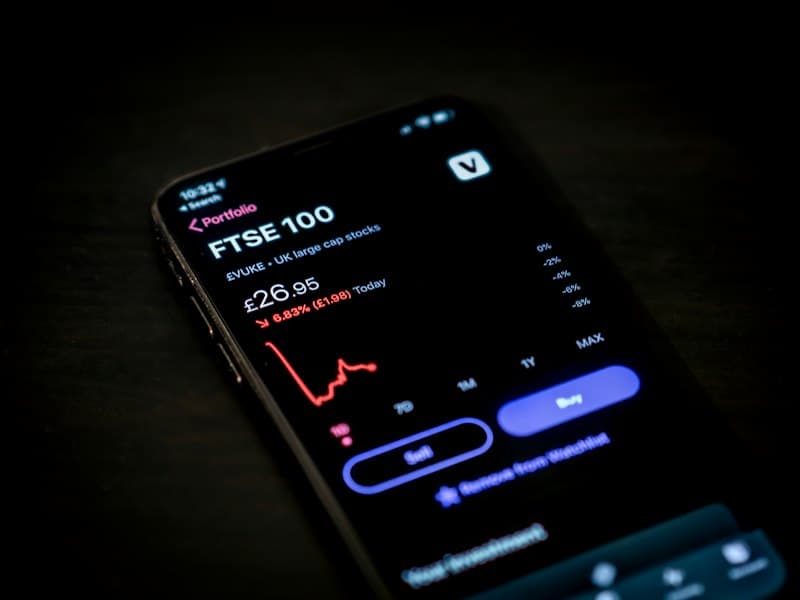
Every trader dreams of a flawless strategy – a set of rules that produces a positive expectancy, a solid risk‑reward ratio, and a high win rate. Yet many traders watch those same strategies crumble, often after a series of losing trades. The missing piece is risk of ruin, a statistical measure that tells you the probability of wiping out your capital given your edge, volatility, and money‑management rules. Understanding risk of ruin is essential for anyone trading forex, crypto, or participating in a Global4EX Challenge evaluation.
Risk of ruin (RoR) is the probability that a trading account will be depleted to zero (or a predefined stop‑out level) before the trader’s edge can generate a profit. It combines three core variables:
Mathematically, a simplified RoR formula for a series of independent trades is:
RoR = (1 - (Edge / Volatility)) ^ (Initial Capital / Risk per Trade)
While the exact calculation can be more complex (especially when using variable position sizes), the intuition is clear: the larger the risk per trade, the higher the chance of ruin, even if the strategy is profitable on average.
A common mistake is risking 5‑10% of the account on each trade. Suppose a trader has a strategy with a 2% expectancy (average profit = 2% of the risked amount) and a 1:2 risk‑reward ratio. If they risk 8% per trade, a single loss can wipe out a quarter of the account. After a few consecutive losers, the account may be forced into a margin call, regardless of the underlying edge.
Drawdowns are inevitable, but the size of a drawdown matters. A strategy that consistently experiences 30% drawdowns requires a larger buffer of capital. If a trader does not allocate enough equity to survive that drawdown, the evaluation (or personal account) will be stopped before the strategy can recover.
Many traders use a fixed lot size instead of a percentage‑based position sizing approach. This creates a situation where a 5% loss on a small account is the same absolute loss as a 0.5% loss on a larger account, skewing risk and inflating the probability of ruin.
A practical rule of thumb for most retail and prop‑firm traders is to risk no more than 1‑2% of the account balance on any single trade. Below is a quick step‑by‑step calculator you can implement in a spreadsheet:
By adjusting the risk percentage, you can directly control the RoR. Lowering risk from 2% to 1% roughly halves the probability of ruin, assuming the same edge and volatility.
Using the RoR calculator, the probability of ruin over 200 trades is roughly 5%. This means there is a 95% chance the account survives the entire trading series.
Because crypto volatility is higher, the same risk percentage translates into a larger dollar loss. The RoR jumps to ≈22% over 200 trades – a much higher chance of wiping out the account despite a positive expectancy.
Takeaway: The same percentage risk behaves differently across markets. Adjust risk‑per‑trade to the asset’s volatility, especially when moving from forex trading to crypto trading.
Prop‑firm challenges, such as the Global4EX Challenge, often impose strict drawdown limits (e.g., 10% max) and require a minimum number of winning days. Traders focusing solely on win rate may overlook the hidden RoR risk. Here’s how to align your money‑management with evaluation rules:
When comparing the best prop firms in 2026, look for flexible evaluation rules and low drawdown thresholds – exactly what Global4EX provides.
Risk of ruin isn’t just a mathematical concept; it directly influences trader psychology. Knowing that you have a low probability of ruin builds confidence, reduces fear during losing streaks, and helps you stick to your process. Conversely, a high RoR creates anxiety, leading to impulsive actions like revenge trading or over‑trading – classic emotional traps.
By integrating RoR analysis into your daily routine, you create a mental safety net. When a losing trade occurs, you can remind yourself that the loss is within the predetermined risk budget, not a catastrophic blow to the account.
A profitable strategy alone does not guarantee long‑term success. Risk of ruin reveals the hidden vulnerability that can turn a winning edge into a losing account. By limiting risk per trade to 1‑2%, adjusting stops for market volatility, and respecting drawdown limits, you dramatically lower the probability of ruin. Whether you trade a personal account or a Global4EX funded account, applying these money‑management principles ensures that your good strategy stays good for the long haul.
Published by the Global4EX Team. Learn more at global4ex.com
Join Global4EX where traders unite, grow, and get rewards.
Join CommunityAll accounts provided by Global4EX are demo accounts operating exclusively in a simulated trading environment. No actual trades are executed on live financial markets. The services we offer are designed for educational and evaluation purposes only.
The simulated trading services are provided by Global4EX, operated by LOGIC GRATE SERVICES LTD. All content published and distributed by Global4EX and its related entities (collectively, the "Company") is for general informational purposes only.
The Company does not provide investment advice.
The Company does not solicit or recommend the purchase or sale of any financial instruments, securities, or funds.
The Company does not act as a broker, custodian, or financial intermediary.
Participation in any program is voluntary, and all fees paid to the Company are strictly service fees only.
Program fees:
are not deposits
do not represent client funds
are not investments
do not generate returns, interest, or profit
These fees are applied toward operational and administrative expenses, including platform infrastructure, technology, support services, and risk management systems. Payment of fees does not create any fiduciary, custodial, or investment relationship between participants and the Company. Participants should understand that such fees provide access only to simulated trading evaluations and related services in a demo environment. Nothing on this website or in our programs constitutes an offer to buy or sell futures, options, CFDs, forex, stocks, or any other financial instruments. All results displayed are based on simulated trading performance. Past simulated performance is not necessarily indicative of future results.
Trading financial markets involves a high level of risk. Even in a simulated environment, strategies and outcomes may not reflect real-world execution. Participants should carefully consider their experience, objectives, and risk tolerance before engaging in any trading-related activity.
The website https://global4ex.com is owned and operated by LOGIC GRATE SERVICES LTD, registered in United Kingdom (Company No. 16914973), with registered office at 5 Brayford Square, London, England E1 0S.
Global4EX © 2026 is a brand name of LOGIC GRATE SERVICES LTD.